



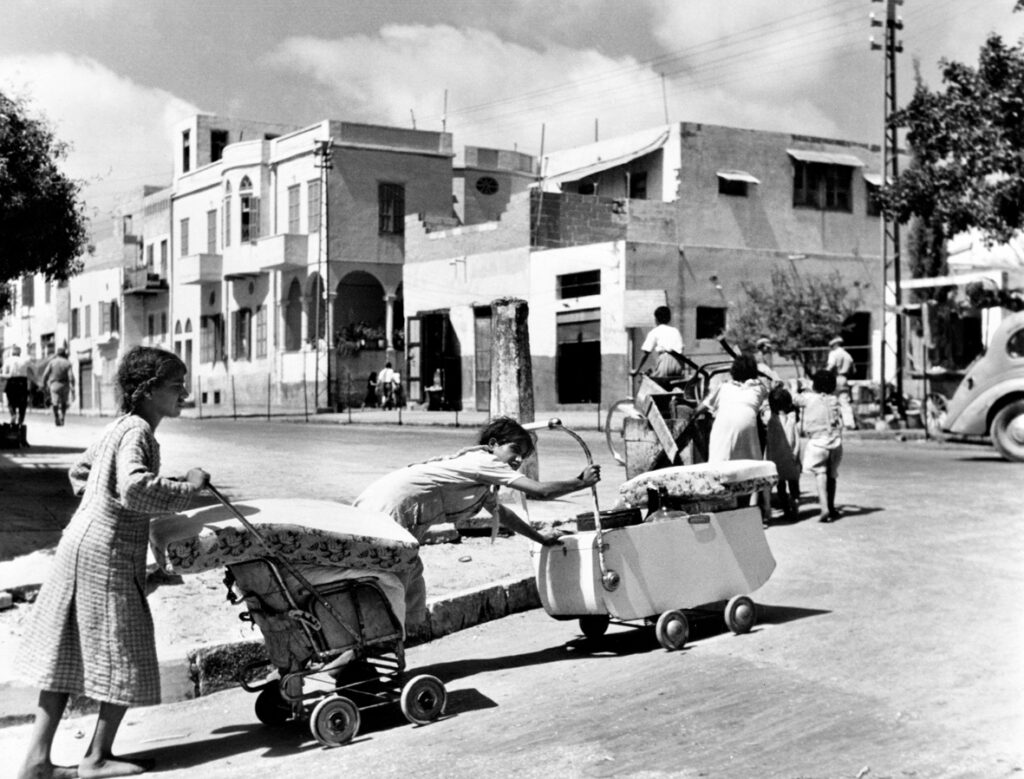
Palestinians around the world are marking Nakba Day, 78 years after their forced mass displacement led to the establishment of the Jewish-majority state of Israel. Decades later, Palestinians still face widespread oppression and violence from the Israeli state as it continues its expansionary project. “Israel tried, since 1948 until today, to destroy us as a people, as a group, and they failed at it. Our people are still there, resilient,” says Palestinian writer Muhammad Shehada, who was born in Gaza and now lives in Denmark. Shehada discusses the ongoing process of the Nakba, including its latest intensification after October 7, 2023. “Now this veneer of civility has fallen off. The mask was taken off. And now it’s a matter of national pride in Israel to brag about annihilating Palestinians.”
Shehada also describes current conditions in Gaza — still under Israeli blockade and occupation — and what he calls the “disarmament trap” of unfairly weighted negotiations designed to strip Palestinians of political autonomy. “The ‘realistic’ proposal that Israel is putting on the table is surrender, capitulate, become fully defenseless, weaponless, and entrust the very army that carried out a genocide against you to be merciful towards you once you are an easier target than you ever were before.”
Finally, he responds to the Israeli government’s recent threat to file a defamation lawsuit against The New York Times, after the paper published a column by longtime opinion writer Nicholas Kristof about systemic sexual abuse against Palestinian detainees in Israeli prisons. “It’s the newspaper of record. It’ll be spread and disseminated widely to an American audience,” says Shehada about the allegations levied in Kristof’s piece. “So we see, basically, an Israeli panic attack in return.”
The above is republished here under a Creative Commons License. The original material is at: Nakba Day: Muhammad Shehada on Israel’s Ethnic Cleansing in Gaza & Ongoing Palestinian Resilience