

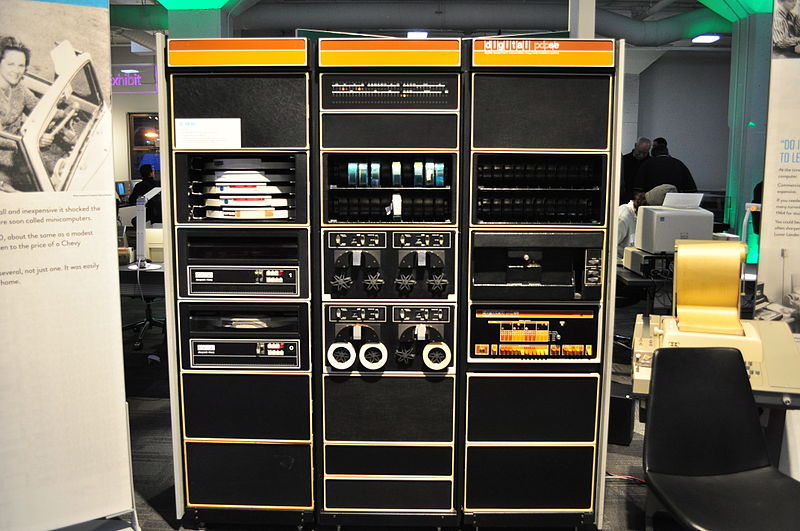
Digital Equipment Corporation DEC PDP-8-e. Living Computer Museum, Seattle, Washington. Joe Mabel, CC BY-SA 3.0 https://creativecommons.org/licenses/by-sa/3.0, via Wikimedia Commons
The editor has a Bachelor of Science Degree in Neuroscience from a major research university in Massachusetts. The coursework was completed at some of America’s most competitive colleges, including a Seven Sisters college. The major curriculum for the degree was taught at five different colleges in Eastern and Western Massachusetts. A significant number of the courses for the major requirements were completed at the graduate level as an undergraduate student.
An avid traveler, the editor has traveled extensively throughout the United States having been to 38 states including the West Coast, Hawai’i, and many visits to the District of Columbia. The editor has traveled in Africa, Asia, Europe, North America, Oceania, and South America. He has traveled to Belgium, Brazil, Canada, Denmark, England, France, Germany, Holland, Iceland, India, Ireland, Luxembourg, Mexico, Morocco, Portugal, and Sweden.
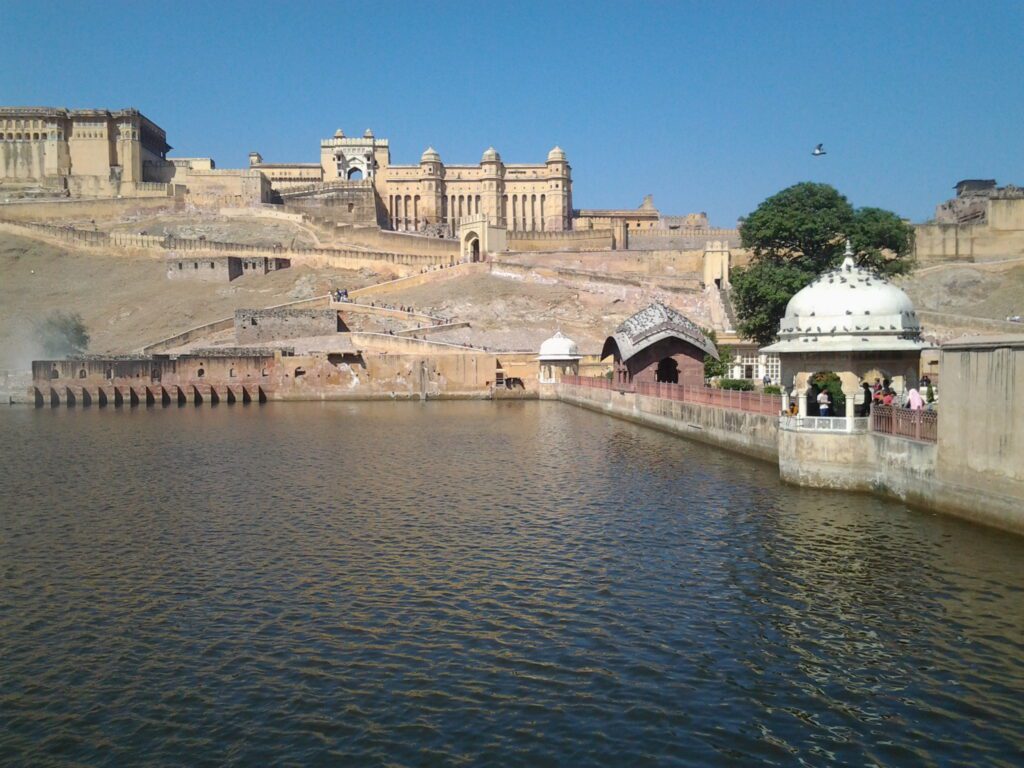
“People who are good at traveling do not have a fixed itinerary, nor do they insist on reaching their destination.” ― Laozi
“善于旅行的人没有固定的行程,也不执着于一定要到达目的地” — 李耳
With over 50 years of working with computer systems, the editor has seen the computer industry evolve firsthand. The editor started working with computers (like the PDP 8e in the above image) at several local colleges as a junior high school student in the 1970’s.
During the 1970’s, keypunch cards and paper tape were used along with Teletype machines and telephone acoustic coupler modems. The editor used a TI Silent-700 portable terminal like the one in the image below at home. The TI terminal used thermal printer paper and was relatively quiet compared to the Teletype machines that sounded like industrial machinery that the editor also used to access different remote systems. The technology was very different from today’s.
Visits to use the Honeywell computer exhibit at the Museum of Science in Boston as a child sparked an intense interest in computing1. Growing up a street away from a local small liberal arts college with a Dec-10 computer timesharing system, serendipitously provided the editor with an opportunity to be mentored by the very kind director of the computer center there.
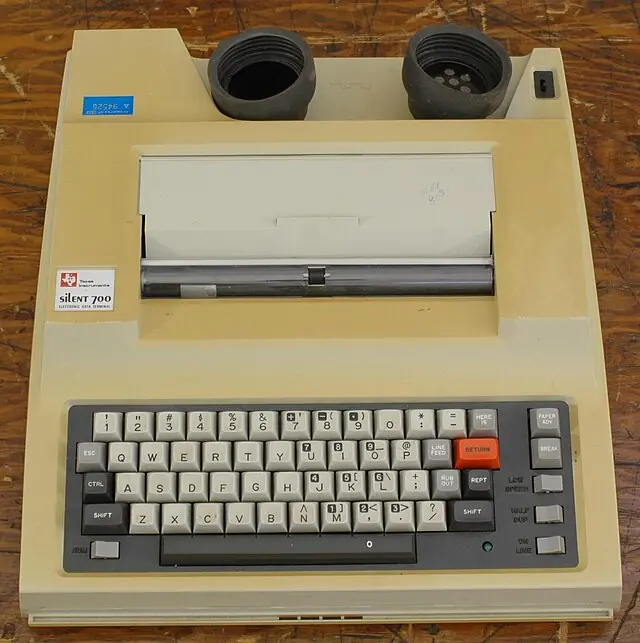
It was uncommon for anyone to have a “computer” at home until the Personal Computer with DOS or Windows emerged later. One typically used a “dialup” modem to connect to a remote computer system like CompuServe from home using a “dumb terminal” of some kind.
The editor’s high school maths department had a Digital Equipment PDP system and a Wang system at a time when many colleges had no computers at all. The high school maths department worked with a local university to provide educational opportunities for selected high school students at the university science center computer center. The earlier start at the local liberal arts college was augmented with a new opportunity at the larger university nearby.
The editor learnt computing skills during these Summer programs at the university that have lasted a lifetime. Local universities provide a great service to the community by offering opportunities for emerging scholars at a young age.
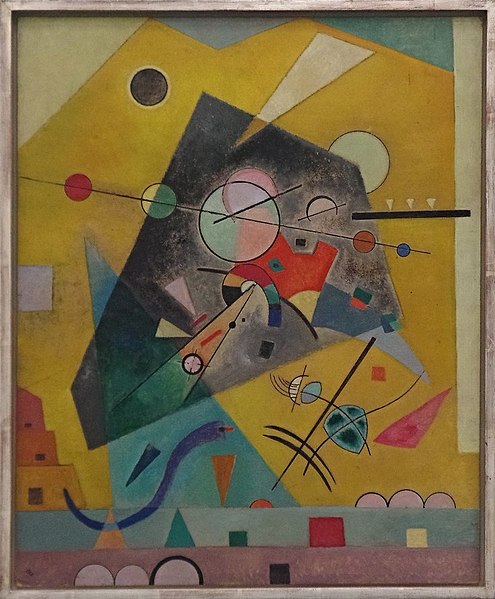
In addition to spending countless hours in the science center, visits to the university’s art museums nearby, enriched and diversified the learning experience. Paintings by the artist Kandinsky now evoke memories of those days at the science center and the surrounding area.
CompuServe, a subscription timesharing service hugely popular at the time, provided the editor with an impressive variety of online offerings and email. CompuServe could be thought of as a precursor to the World Wide Web that would come later in the 1990’s.
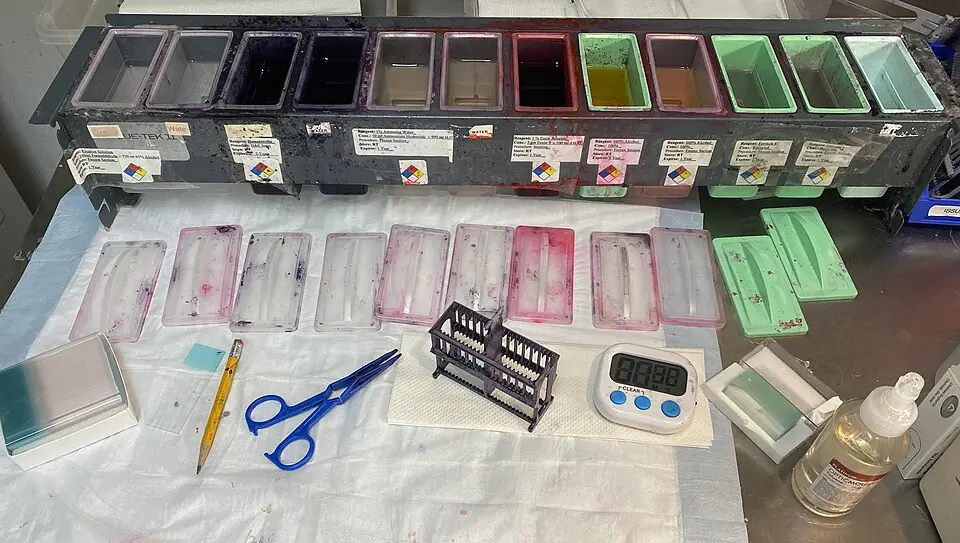
The editor has worked for many large organizations including several different universities, major medical centers, manufacturing companies, health care insurance companies, the federal government, as well as several different pharmaceutical companies. The editor’s extensive background in information systems is enhanced by his earlier experiences as a research assistant on several different research projects at major teaching hospitals. Set in a hospital clinical laboratory environment, these projects in neuroscience involved histology, chemistry, and computer imaging.
The editor was the data warehouse architect for a patient safety system at a major Ivy League urban medical center that won an award from AMDIS (Association of Medical Directors of Information Systems).
With a diverse background and many experiences the editor hopes to offer insight and add value to a variety of topics, especially those appearing in the news.
“Pain is the great teacher of mankind. Beneath its breath, souls develop.” (Der Schmerz ist der große Lehrer der Menschen. Unter seinem Hauche entfalten sich die Seelen.) — Marie von Ebner-Eschenbach
- R. A. Kahn, “Microsystems Public Access to Personal Computing: A New Role for Science Museums,” in Computer, vol. 10, no. 4, pp. 56-66, April 1977, doi: 10.1109/C-M.1977.217714.
keywords: {Home computing;Time sharing computer systems;Distributed computing;Computer aided manufacturing;CADCAM;Educational technology;Peer to peer computing;Computer peripherals;Computer science education}, ↩︎