

Nation sports editor Dave Zirin takes on the ‘outsized life’ of the author of ‘The People’s History of the United States’
By Jim Sullivan August 7, 2026
This story was originally published in the Forward. Click here to get the Forward’s free email newsletters delivered to your inbox.
“I am a sportswriter by trade,” Dave Zirin, sports editor at The Nation, told me. Zirin has written 11 books, all of them dealing with the knotty and oft-controversial politics of sport, coming at the games he loves — and the machinations behind them — from a progressive position. His previous subjects have included Colin Kaepernick, Barry Bonds and John Carlos.
But Zirin’s latest book, The People’s Historian: The Outsized Life of Howard Zinn, is not that. It’s a biography of the late Boston University professor and self-described “radical historian,” best known for the long-running bestseller, A People’s History of the United States, which was first published in 1980.
“I never would have thought in eight trillion years that I was ever going to write a book about Howard Zinn,” Zirin, 52, told me by phone from Washington, D.C.. “He was a hero of mine, a great influence, and I would have thought it presumptuous to even think about it, not just to mention that I never gave thought to writing a non-sports book.
“But I just had so many people in recent years want to engage me in this discussion of ‘What would Howard say about these incredible demonstrations in 2010 of the Black Lives Matter movement, and, especially, in the age of Trumpism, the rise of neo-fascism, not just in this country, but abroad?’”
If Zirin couldn’t divine an exact answer, he was at least in a position to hazard an educated guess. Turned on to an abbreviated 20th century-focused version of A People’s History as a high school graduation gift by his sister, Zirin became a history major at Macalester College in St. Paul, Minn. Much later in life, Zirin found himself hosting Q & A sessions with Zinn at venues throughout the country.
Zirin says that the events of the two Trump terms made people wonder: “‘Would that have shaken Howard’s faith in the power of the people to make positive change and the ability for people to bend the arc of history, as they say, toward justice?’ That made me want to write the book.”
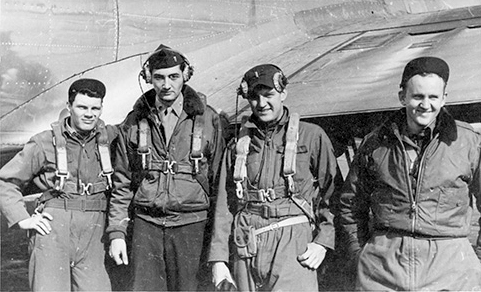
When he started work on the biography, Zirin knew the basics of Zinn’s public trajectory: his service in WWII as an Air Force bombardier; his stint teaching at Spelman College and his role in the Civil Rights movement, his protests against the Vietnam War, his ongoing conflict with Boston University president John Silber, his work as a playwright, the Hollywood actors and rock musicians who read his prose and wanted to meet and work with him. The bottom line: Zinn had an unwavering commitment to unions and organization, the power of the people.
“The power of tyranny is overestimated (not in the short run, but in the long run),” Zirin quotes Zinn as saying in his preface, “and can be overcome by the unity, the determination, of apparently powerless people.”
“When we were on stage,” Zirin told me, “he would speak about things he was a central player in, but he would kind of leave himself out of the narrative, partly out of humility but I also think that’s the political training of people who came up in the 1930s during the Depression. They’re always thinking about the movement, not about themselves.
Still, Zirin added, “Howard had so many great stories that he would tell about his life offstage. So, I really wanted to tell his story because I felt truly that it hadn’t been told and I wanted to learn about him. I wanted to invest in it.”
What did Judaism mean to Zinn and, now, to Zirin? “Judaism was expressed through the pursuit of knowledge, of questioning established truths, and always standing with the underdog,” said Zirin. “It is why he felt strongly that Jews of conscience needed to advocate for the Palestinian people. I am inspired by this commitment to tikkun olam and I share his approach to how we need to apply our faith: as voices against apartheid and genocide.”
Zinn’s cultural identification as a Jew often emerged in his sense of humor that Zirin calls his “secret sauce.”
“It’s not like I think Howard Zinn was like Billy Crystal with a history book,” Zirin said. “His ability was to keep an audience listening through humor. [He could] apply history to the present and make people think about it, bring it alive in present terms and then Howard had that third layer, that third gear, where he could be funny and affable and work that twinkle in his eye and that smile and keep an audience focused. I think that allowed him to speak in a lot of diverse circumstances.”
Zinn, of course, attracted negative heat, too. In 2020, President Donald Trump said, “Our children are instructed from propaganda tracts, like those of Howard Zinn, that try to make students ashamed of their own history.” Zinn caught flak not just from the expected bastions of the far-right but also from other historians. The latter, Zirin says, were critical of Zinn mostly out of jealousy. Zinn was popular and well-read; they were not.
“He was able to break out of the academy and impact the world,” Zirin said, “He saw academic praise meaning very little relative to the world. He took greater joy in writing 800-word columns that spoke to what was happening rather than writing another 800 -page book the likes of which a lot of academics write, these things that no one reads.”
As to the right-wing trolling, Zirin said, “I think he would have just taken that as a badge of honor. I think for Howard that just rolled off his back because of his interests, which was in teaching and seeing how what he was teaching applied to the world — he loved bringing the lessons of the street into the classroom and he loved seeing what was in the classroom applied to the streets. He was blessed to have lived in interesting times and in important places.”
The book explores Zinn’s family life, too. Zirin got co-operation and input from Zinn’s son Jeff, an activist-playwright, and his daughter, Myla, an educator and environmental advocate. Some of those stories involve their upbringing. Howard was on the road frequently, and Zirin writes that his wife Roslyn (Roz) had to play good cop and bad cop, neither role she relished.
Roz Zinn, who died at 85 from ovarian cancer in May 2008, was also an activist and artist, and though the couple remained happily married for 64 years, she lived, to an extent, in his shadow. Her death crushed him.
“Howard stayed extremely active after Roz passed and in many ways that was his therapy,” Zirin said. “He took to email voraciously. He traveled, he spoke, he did events like the ones I did with him where he could sit because, while he was still sharp, he didn’t want to stand that long. The twinkle would go out during those moments when the warmth of a crowd, or a friend, would leave the stage or his presence.”
“At the very end,” Zirin said, “he had these moments of looking very sad. How do you comprehend what it’s like to lose someone you’ve been married to for 64 years? Incomprehensible.”
Zinn died from a heart attack at 87 on Jan. 27, 2009. He’d been in a swimming pool in a Santa Monica, California hotel. He was not, as some said, swimming laps; he didn’t have the strength for that. At the memorial service at the Arlington Street Church in Boston April 23, 2010, Myla said he was standing in the pool. A pool worker pulled him out of the water and asked if Zinn wanted an ambulance. He reportedly said, “No, I’m OK.”
Zinn’s friend Noam Chomsky spoke at the service, as did Matt Damon — whose family grew up next to the Zinns in Newton, Mass. — and poet Martín Espada, who read a tribute poem written for Zinn. Dr. Bernice Johnson Reagon — founding member of the SNCC Freedom Singers and Sweet Honey in the Rock, cultural historian and activist — led the crowd in singing “This Little Light of Mine” and “Joshua Fought the Battle of Jericho.”
Zirin told me that Zinn’s writings and words have made him less pessimistic about the world. “It irrevocably changed me,” he said. “The main effect that Howard had on my own outlook was that there are answers in history. Howard imbued me with this idea that you had to be more than angry. You had to have a sense of the world if you wanted to change it. I also really thought about how we could not just be objects but subjects of history.”
“So many people out there want the world to be a different place and are disgusted by the state of things, of what Naomi Klein describes as ‘end times fascism,’” Zirin said. “You try to imagine a sense that if you can root your ideas and even your anger in history, there’s a path out, there’s a road map out.”
This story was originally published on the Forward.
